
Home/Blog/From pilot to production: an operational playbook for reliable agent fleets
From pilot to production: an operational playbook for reliable agent fleets
September 8, 2026
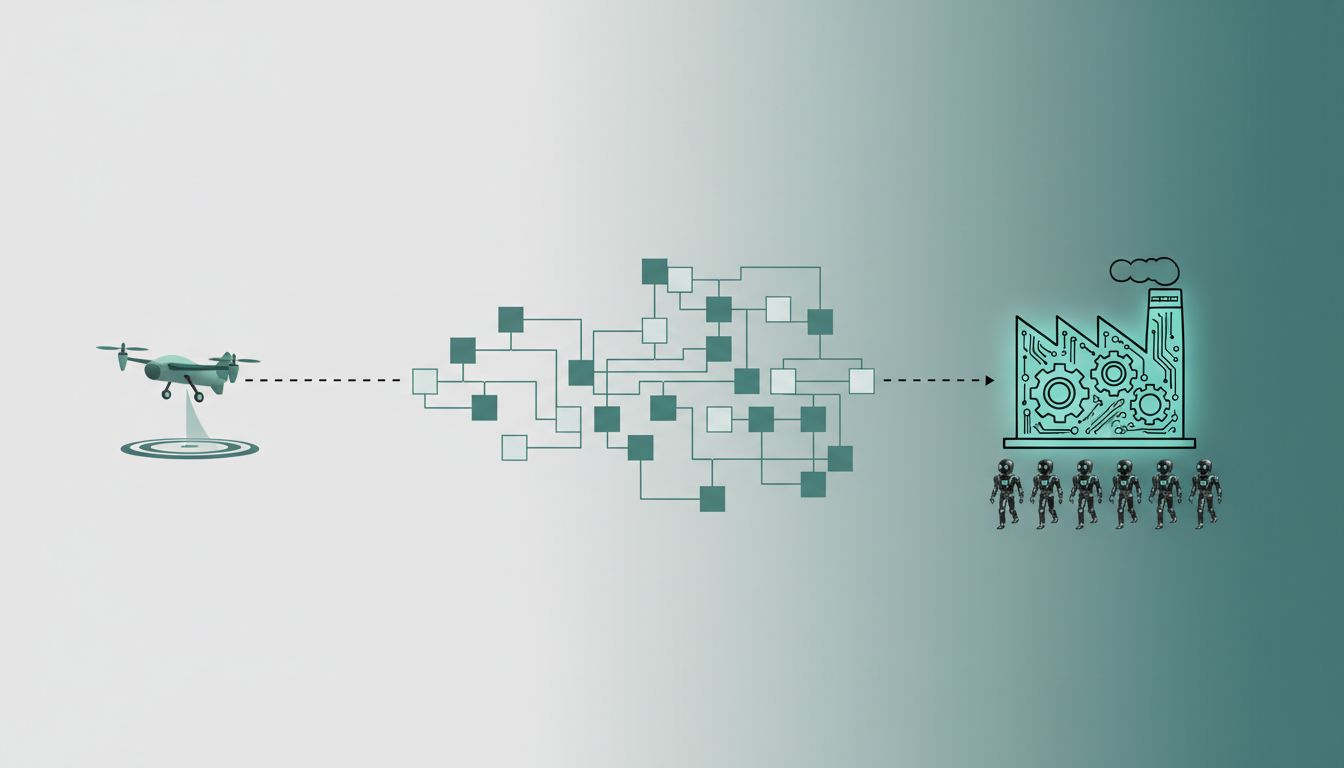
Moving an AI agent from a successful pilot into production is not a matter of turning on more traffic. A pilot can prove that a model, prompt, or workflow is promising under curated conditions. A production fleet must continue to work when requests are ambiguous, tools are degraded, permissions vary, context crosses agent boundaries, and business conditions change. For platform engineers and operations teams, the real deliverable is therefore an operating system for dependable behavior,not a polished demo.
Recent deployment guidance from AWS and OpenAI converges on this point: pilot-to-production should be a repeatable deployment playbook, not a one-off launch. Shorter product cycles favor tighter build-and-learn loops over prolonged validation phases, but speed cannot mean uncontrolled release. Reliable agent fleets need explicit workflow ownership, instrumented orchestration, realistic evaluations, staged rollout, governance, and runbooks that make failures diagnosable and recoverable.
Start with a production definition, not a pilot definition
A pilot is usually judged by whether an agent can complete a useful task often enough to earn further investment. Production has a broader standard. The system must deliver an acceptable outcome consistently, within defined latency and cost boundaries, while respecting permissions, policies, and escalation rules.
This distinction matters most for fleets. A specialist agent may perform well alone but fail inside an orchestrated workflow because it receives incomplete context, calls an unavailable tool, misunderstands a handoff, or takes an action beyond its authority. The control plane must make those dependencies visible and enforceable.
Production readiness is the ability to operate a changing agent system under real-world variability, not merely to demonstrate that an agent can answer a representative prompt.
OpenAI’s deployment guidance emphasizes beginning with high-value workflows and then connecting knowledge, systems, permissions, policies, testing, and rollout. That sequence is useful because it prevents teams from treating the agent as an isolated interface. An agent is part of a business process, and the surrounding systems determine whether its output is safe and useful.
Write an operational contract for every workflow
Before scaling traffic, define what the workflow is allowed to do and what happens when it cannot safely continue. The contract should be understandable to engineering, product, operations, security, and the business owner.
Business objective:
the high-value outcome the workflow is intended to produce.
Completion boundary:
what counts as completed, partially completed, failed, or handed off.
Approved actions:
the tools, systems, and write operations each agent may use.
Context boundary:
the information that may be passed between agents, retained in memory, or exposed to a reviewer.
Reliability target:
the expected workflow completion behavior, including retry and fallback rules.
Escalation rule:
when low confidence, high stakes, missing capability, or policy conditions require a human reviewer.
These definitions should be versioned with the workflow. Without them, a quality discussion becomes subjective and an incident response team cannot distinguish an intended refusal from an avoidable operational failure.
Use six operational pillars to close the demo-to-production gap
A practical framework from AWS describes production agent operations through six pillars: Build, Test, Run, Secure, Observe, and Govern. The value of this model is its completeness. If one pillar is absent, a seemingly impressive system can remain demo-ware because the organization cannot safely understand, control, or improve it in operation.
Build:
create clear agent roles, orchestration paths, tool interfaces, and versioned configurations. Model choice is an operational decision because it influences reasoning quality, latency, cost, and tool-calling reliability.
Test:
evaluate the whole workflow, including dependent components, orchestration protocols, and business processes. Testing should occur before production and after every behavioral change.
Run:
provide ownership, deployment procedures, incident handling, retries, queue management, and rollback mechanisms.
Secure:
constrain permissions, protect data paths, define approved actions, and ensure that agents cannot gain authority merely because a tool is connected.
Observe:
collect the evidence needed to understand decisions, tool use, handoffs, latency, and failures.
Govern:
maintain policies, guardrails, human oversight, review processes, and accountability as the fleet expands.
The pillars are interdependent. For example, an evaluation result is less useful without trace data that explains it. A trace is less actionable without a release mechanism that can roll back a harmful configuration. A secure tool boundary does not eliminate the need for governance over when a delegated action should be allowed in the first place.
Make the orchestration layer a product surface
In a multi-agent environment, the orchestrator is not passive plumbing. It decides which specialist receives work, what context is transferred, which tools are available, whether work can happen in parallel, and when a human should enter the loop. Those choices deserve the same engineering discipline as an externally visible application API.
OpenAI describes modern agent execution as agents working together in parallel across real workflows and environments. Parallelism can improve throughput and reduce time to completion, but it also increases coordination risk. Define dependencies explicitly so agents do not duplicate actions, make incompatible assumptions, or race to update the same business record.
Design handoffs that preserve context and limit authority
Fleet reliability often breaks at the boundaries between specialists. A routing agent may identify the right destination but send too little context. A receiving agent may have the needed context but lack a clear statement of its permitted action. Or an agent can continue confidently even though the task has exceeded its capability.
Standardized handoff protocols address this failure mode. AWS recommends coordination mechanisms that transfer context reliably and route work to a human reviewer when confidence, stakes, or capability thresholds are exceeded. Treat a handoff as a structured event, not as an informal natural-language message.
A practical handoff payload
Each transfer should carry only the context necessary for the next agent to act, plus enough provenance for an operator to reconstruct why the work moved. The exact schema will vary, but a durable protocol commonly includes the following fields:
Workflow and execution identifiers, along with the current workflow state.
The user goal and the scoped subtask assigned to the next agent.
Relevant source references, tool outputs, and assumptions made so far.
Allowed tools, permission scope, policy constraints, and prohibited actions.
Confidence or risk signals, including reasons for uncertainty when available.
A required completion format and the next route: another agent, a finalizer, retry logic, or human review.
Do not use context transfer as an excuse to pass every prior message or raw tool response. Excess context can increase latency, cost, confusion, and exposure. It can also make it harder to determine which information led to a bad decision. Instead, preserve the authoritative record in the execution trace and pass a deliberately scoped working context.
Build human escalation into the normal path
Human review is not evidence that the fleet failed. It is a designed outcome for work that crosses a defined threshold. A reliable system should identify whether the threshold is driven by low confidence, a high-stakes domain, missing tool capability, a sensitive action, or conflicting evidence.
The reviewer needs actionable context: the proposed action, the evidence used, the applicable policy, the trace location, and the choices available. Sending a human a vague message that an agent is “uncertain” simply relocates the operational burden. Good escalation shortens review time while preserving human authority.
Evaluate workflows repeatedly and at production realism
Single-shot testing is too weak for agentic systems. An agent can succeed once through a tool-use sequence and still be unreliable across repeated attempts, slightly different inputs, or changing tool responses. AWS recommends at least 10 repeated trials per question, organized by category, to benchmark reliability and identify opportunities for specialization.
That recommendation is especially important for fleets because reliability is not only a model property. It emerges from routing, context preparation, tool availability, prompt and policy configuration, retry behavior, and human handoff. Evaluate the complete path that users and downstream systems will experience.
Build a layered evaluation set
A useful regimen separates development checks from production evidence while keeping both tied to the same operational contract.
Development benchmarks:
Use on-demand evaluation to compare changes before release. Include normal cases, edge cases, tool errors, incomplete context, routing ambiguity, and refusal or escalation scenarios.
Pre-launch simulations:
Exercise realistic failure modes across components, orchestration protocols, and business processes. OpenAI notes that simulated traffic can extend to complex agent settings with tool use and can improve pre-deployment predictions in a checkable way.
Production monitoring:
Use online evaluation to detect quality changes after release. Production traffic reveals drift, tool behavior, and request patterns that curated sets may miss.
Hard production benchmarks:
Maintain a benchmark that is more challenging and more representative of production behavior than a standard evaluation set. Lower scores on such a set should not be surprising; they may be a more honest signal.
OpenAI’s internal operating approach compares evaluations to continuously running unit tests that catch regressions as the agent expands. That is the right mindset: evaluations are part of the delivery pipeline, not a report generated near a launch milestone.
Be disciplined about the evaluation harness as well. OpenAI’s shared guidance for third-party evaluations notes that harness selection can materially change measured capability on long, multi-step tool-use tasks. Record the harness, tool environment, scoring criteria, retry rules, and any human review procedure. Otherwise, a change in measurement can be mistaken for a change in agent capability.
Instrument the fleet for decisions, not only errors
Traditional application monitoring is necessary but insufficient for agents. A service can return a successful response code while the agent selects the wrong tool, follows a plausible but incorrect line of reasoning, enters an infinite reasoning loop, or produces an answer that looks credible but does not satisfy the workflow. These are silent failures from an infrastructure perspective.
AWS recommends three complementary observability layers: metrics, traces, and structured logs. Together, they let teams inspect reasoning steps, tool calls, and divergence points across execution. The objective is not to collect every token indiscriminately; it is to retain the evidence needed to operate safely, debug efficiently, and meet data-handling obligations.
What each observability layer should answer
Metrics
answer fleet-level questions: Are completion rates changing? Is p95 duration rising? Are costs, retries, queue depth, escalation rates, or tool error rates moving outside expected ranges?
Traces
answer execution questions: Which agent was selected? What handoff occurred? Which tool call slowed or failed? Where did an execution diverge from a healthy path?
Structured logs
answer diagnostic questions: What version ran? What policy decision applied? What tool request and response category occurred? What retry, fallback, or escalation decision was made?
Use consistent identifiers across the control plane, agents, tools, queues, evaluation records, and review actions. If a quality evaluator flags a workflow but the operations team cannot join it to the deployed configuration and tool trace, diagnosis becomes manual archaeology.
Watch the failure classes that matter
AWS groups most production issues into quality, reliability, and efficiency. Quality failures yield an inadequate outcome. Reliability failures prevent the workflow from completing. Efficiency failures consume excessive time or resources. The categories overlap, but separating them improves ownership and incident prioritization.
Efficiency deserves explicit attention after basic debugging is complete. Slow response times and unbounded memory growth are common production problems. Long-running sessions can accumulate context or state until performance becomes unpredictable. Set observability around session duration, memory behavior, context growth, step counts, and execution duration so these issues become detectable before they become widespread.
Operate with runbooks that map symptoms to evidence
Reliable fleets do not depend on the person who originally built the prompt being available during an incident. They need runbooks that describe the first evidence to inspect, the safe mitigation options, the escalation owner, and the verification step after remediation. For orchestrated systems, four scenarios should be first-class: workflow failures, latency regressions, quality regressions, and dead-letter queues.
Workflow failure: establish whether the dependency or the workflow broke
When an execution fails, inspect execution history and tool health before making a broad model or prompt change. AWS guidance points teams to Step Functions history, the failing Lambda logs, and MCP server health when a tool call is involved. The platform-specific services will differ across stacks, but the operational sequence is widely applicable: locate the failed step, identify its input and dependency state, then confirm whether the tool boundary is healthy.
Retries should be bounded and classified. Retrying a transient tool timeout may be appropriate. Repeating an unsafe write operation or a request rejected by policy may not be. A dead-letter queue is valuable only if someone owns its triage, replay conditions, and expiration policy.
Latency regression: use percentiles and step-level traces
Average duration can hide painful user experiences. For latency regressions, AWS recommends inspecting p95 execution duration, service maps, and model latency metrics to isolate bottlenecks. Review slow orchestration steps, serial dependencies that could be safely parallelized, tool wait time, retry patterns, and unnecessary context assembly.
Do not optimize latency by removing guardrails blindly. The goal is to identify the slow component and decide whether the remedy is a model choice, a tool improvement, a shorter context path, a cache or queue design, a routing change, or a product-level expectation change.
Quality regression: compare traces, then roll back when confirmed
When online evaluation or user signals indicate a quality drop, compare the current evaluation trace with a previous healthy trace. AWS specifically recommends using trace tools such as LangSmith or LangFuse for this comparison and triggering rollback if the regression is confirmed. Look for altered routing, changed tool output, a missing policy instruction, a different model configuration, or context loss at a handoff.
A rollback should restore a known configuration, not merely disable a feature in an ad hoc way. Preserve the failing examples for the evaluation suite, but avoid promoting unreviewed production content into a benchmark without considering privacy, security, and labeling quality.
Release changes through controlled feedback loops
Agent fleets change frequently: models are updated, tools evolve, policies are refined, prompts change, and new specialists join the routing graph. Every behavioral change can affect the full workflow. The safer pattern is closed-loop optimization: detect a quality issue, inspect traces, adjust configuration, re-evaluate, and roll out gradually.
AWS describes production-quality optimization as a loop from production traces to recommendations, batch evaluation, A/B testing, and confident shipment. This is stronger than optimizing from anecdotal feedback because each proposed improvement is connected to observed execution evidence and then tested before broad exposure.
Use live experiments as a release mechanism, not a gamble
Live traffic experiments are becoming a standard way to improve agents safely. AWS notes that A/B testing can split production traffic between agent variants and report confidence intervals and statistical significance. This creates a disciplined bridge between offline evaluation and actual use.
State the hypothesis before exposing traffic: for example, a routing or tool-change is expected to improve a defined quality measure without worsening completion or latency.
Keep the variants identifiable in traces, logs, and evaluation records.
Define guardrails that stop or reduce exposure when reliability, policy, cost, or user-impact signals deteriorate.
Review both aggregate results and important slices, such as workflow category, tool dependency, and escalation path.
Promote, revise, or roll back based on evidence rather than on a compelling individual transcript.
Staged rollout also protects operational teams. A small release can expose missing dashboard fields, unclear incident ownership, or unexpected queue behavior while the blast radius is limited. Treat those discoveries as improvements to the fleet operating model, not as peripheral deployment work.
Govern delegated work with clear ownership and guardrails
As organizations move from chat-based assistance toward delegated agent work, operational trust depends on governance as much as capability. OpenAI’s B2B guidance highlights a pattern among leading firms: measure depth, build governance for production use, invest in enablement, scale what works, and manage the transition to delegation deliberately.
Governance should translate broad policy into controls that the fleet can execute. OpenAI’s production guidance identifies policies, guardrails, approved actions, simulations, evaluation tools, and an improvement process as core production components. Each component needs an owner, a review path, and evidence that it is working.
Assign responsibilities before scale exposes the gaps
Platform engineering can own the orchestration workspace, deployment controls, shared observability, and reliability tooling. Agent or workflow owners can own task definitions, evaluation categories, and business-quality thresholds. Security and governance teams can own permission models, data constraints, and policy review. Operations teams can own runbooks, incident coordination, and escalation service levels. Business stakeholders should own the acceptability of outcomes and the circumstances that require human approval.
These roles do not need to create bureaucracy around every prompt adjustment. They do need to make it clear who can approve a new tool, expand an action scope, modify a high-stakes workflow, or accept a known limitation. Governance becomes practical when it is built into the normal release path.
Measure depth of use, not only access
Adoption counts alone do not show whether a fleet is creating dependable value. Measure the operational depth of the workflows that matter: completion behavior, escalation patterns, tool dependency health, evaluation results, regression frequency, and the amount of human work genuinely removed or redirected. OpenAI reports that agent usage can scale rapidly after adoption, including highly parallel use; that possibility makes disciplined measurement and governance more important, not less.
Turn the playbook into a repeatable fleet lifecycle
The most effective implementation is a lifecycle that teams can run repeatedly for each new workflow and each meaningful behavioral change. It should be lightweight enough to support shorter product loops, but explicit enough that production evidence, controls, and accountability do not get lost.
Select the workflow:
prioritize a high-value process with a clear business owner and measurable outcome.
Define the contract:
document completion, approved actions, permissions, policy constraints, handoffs, and human escalation thresholds.
Build for orchestration:
create specialist roles, standardized handoff payloads, bounded tool access, versioned configurations, and safe fallbacks.
Test repeatedly:
run categorized, repeated trials; validate dependent systems and realistic failure modes; use simulation where it improves pre-launch prediction.
Instrument before release:
ensure metrics, traces, and structured logs connect the workflow, agent, tool, version, and evaluation result.
Release in stages:
apply controlled traffic exposure, online evaluation, explicit rollback conditions, and experiment analysis where appropriate.
Run and improve:
triage workflow, latency, quality, and dead-letter scenarios; inspect evidence; correct configuration or dependencies; re-evaluate before wider rollout.
Govern continuously:
review authority, policy fit, data handling, human escalation outcomes, and the ongoing suitability of the workflow for delegated work.
This lifecycle accommodates innovation without normalizing improvisation. It also creates reusable platform capabilities: a shared tracing convention, a common evaluation harness, handoff schemas, deployment gates, access controls, dashboards, and incident templates. Those assets reduce the cost of bringing the next specialist agent into production.
A reliable agent fleet is not defined by the absence of failures. It is defined by the ability to detect silent failure, understand what happened across models and tools, contain the impact, involve humans at the right boundary, and improve the system through measured change. That is why observability, evaluation, and runbooks belong alongside prompt design and model selection.
From pilot to production, the operational goal is repeatability. Build around high-value workflows, test the full orchestration path, standardize handoffs, instrument decisions and dependencies, release through controlled feedback loops, and govern delegated actions with clear ownership. When those practices are embedded in the control plane, specialist agents can scale from isolated experiments into a fleet that teams can operate with confidence.