
Home/Blog/How the stateless context protocol is lowering cost, complexity and risk for enterprise ai integrations
How the stateless context protocol is lowering cost, complexity and risk for enterprise ai integrations
September 18, 2026
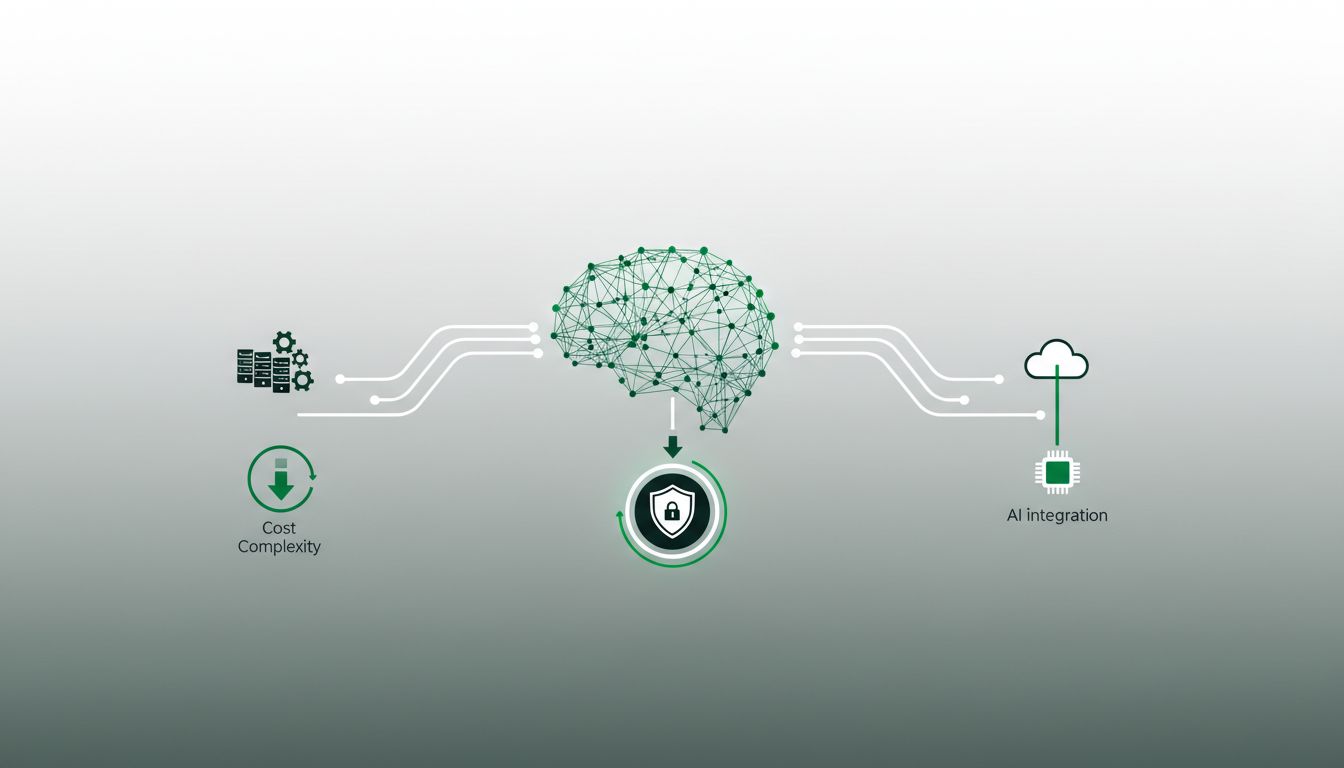
Enterprise AI programs rarely fail because a model cannot generate a useful answer. They stall because the model must safely reach the systems where work happens: identity platforms, data warehouses, ticketing tools, CRMs, internal APIs, knowledge bases, and line-of-business applications. Every point-to-point connector can introduce its own authentication flow, transport assumptions, lifecycle management, observability gaps, and security review. As the number of agents and tools grows, that integration layer becomes an expensive operational product in its own right.
The Model Context Protocol (MCP) is intended to reduce that burden by standardizing how AI systems access external tools, environments, and memory. Its 2026 spec reset is especially consequential for enterprise architecture because it removes protocol-level sessions and the initialization handshake in favor of a stateless core. For platform engineers and operations teams, that change is not merely a protocol detail: it changes where state lives, how remote servers scale, how failures are handled, and how much custom infrastructure is required to operate AI integrations responsibly.
Why enterprise AI integration costs compound so quickly
Most enterprise AI estates begin with a small number of promising use cases. A team connects an assistant to a document repository, then adds a support system, then a data platform, then approval workflows. The initial connector may be manageable, but the surrounding work expands rapidly when each connection follows a different contract.
Teams must answer recurring questions for every integration. How does the agent discover available actions? Which identity is used? Where are access policies evaluated? How are tokens refreshed? What happens if an action takes longer than a request timeout? Can the connection be audited, revoked, versioned, and safely reused by another agent?
The hidden work behind bespoke connectors
Transport engineering:
maintaining custom request formats, streaming behavior, retries, and error semantics between clients and services.
Lifecycle management:
creating, storing, expiring, and recovering connection or session state.
Security implementation:
building OAuth flows, token handlers, authorization checks, credential storage, and administrative controls repeatedly.
Operational support:
diagnosing incidents across heterogeneous integrations and deciding where state, logs, and ownership reside.
Change management:
updating clients when an upstream system, API, or integration contract changes.
These costs are multiplied in multi-agent environments. A general-purpose orchestrator may need to route a request to specialist agents, pass relevant context, and let those agents call different tools. If every agent carries a custom integration model, the control plane has to accommodate a growing collection of exceptions. This makes policy enforcement and operational consistency harder, not easier.
OpenAI’s enterprise perspective has made a related point: the constraint on enterprise AI value is not simply model intelligence. Workflow design, integration across systems and data, and change management are central constraints. MCP does not eliminate those organizational challenges, but it gives teams a shared protocol layer on which they can address them more consistently.
A useful way to evaluate MCP is not as a replacement for enterprise architecture, but as a common contract that reduces the amount of integration architecture each new AI use case must reinvent.
What the stateless core changes in practice
The 2026 MCP specification changes the operational model by removing protocol-level sessions and the initialization handshake. The protocol’s stateless core is explicitly described as running on ordinary HTTP infrastructure. In a remote deployment, a server no longer needs to preserve protocol session state simply to continue serving subsequent MCP requests.
This distinction matters because session management is rarely free in production. Stateful services require teams to decide how sessions are created, routed, persisted, expired, recovered, and correlated during troubleshooting. They may need sticky routing, shared session stores, or additional recovery behavior when an instance fails. Those capabilities can be appropriate for an application, but they should not be imposed by a protocol when many integrations do not need them.
Horizontal scaling without protocol-held state
With a stateless protocol core, requests can be served through conventional HTTP infrastructure without requiring the server fleet to retain protocol-level session affinity. That better aligns MCP servers with familiar enterprise patterns such as load balancing, independently scalable instances, standard health checks, and routine deployment replacement.
The important qualification is that stateless MCP does not make every connected system stateless. A tool may still create a support ticket, start a long-running job, write a record, or depend on a database transaction. Application state remains wherever the underlying business process requires it. The benefit is narrower and valuable: teams do not also have to maintain protocol session state as a mandatory part of the integration.
Receive a request
through a supported MCP transport.
Authenticate and authorize
the request using the organization’s chosen identity and policy controls.
Execute or delegate
the requested tool or resource operation against the relevant system.
Return a result
without requiring a protocol session to be retained for the next interaction.
The 2026 MCP release commentary describes this model as removing operational complexity and unlocking MCP at enterprise scale. That is a credible architectural claim when interpreted carefully. It does not guarantee lower spend for every workload, but it can remove a category of infrastructure and engineering work that otherwise accompanies stateful protocol services.
How stateless MCP can lower integration cost
Cost reduction in enterprise AI is often less about a dramatic unit-price change and more about eliminating repeated work. A common protocol lets a platform team invest in shared guardrails, shared deployment templates, and shared observability rather than maintaining a unique integration framework for each agent and data source.
The stateless core reinforces that effect by allowing remote MCP servers to use ordinary HTTP infrastructure. Organizations can apply existing practices for deployment, load balancing, monitoring, and capacity management instead of operating custom session-aware services purely for protocol compatibility. Fewer specialized moving parts generally means less engineering time spent building and supporting them.
Where the savings can appear
Lower platform over:
remote servers can scale horizontally without holding protocol session state, reducing the need for custom session-management components.
More reusable engineering:
a standard interface for tools and resources makes it easier to create repeatable patterns for connector development, testing, and operations.
Less duplicated security plumbing:
official authorization patterns and SDK support can reduce the need to write custom token-handling logic for each implementation.
Reduced discovery friction:
the official MCP registry provides a central place to discover servers, helping teams assess reuse before commissioning a new one-off connector.
Lower maintenance exposure:
official extensions and a formal deprecation policy create a clearer path for capability growth and protocol evolution.
Cost discipline still requires measurement. Teams should distinguish reduced integration effort from total AI program cost, which also includes model usage, data preparation, security review, workflow redesign, and change management. A server that is easy to deploy but exposes an expensive or unreliable backend is not automatically economical. The protocol lowers a portion of the integration burden; it does not change the economics of every tool call.
For a centralized AI agent orchestration workspace, the practical opportunity is to standardize the path from user request to specialist agent to MCP-connected system. Routing, context handoff, and tool-backed workflows can sit behind one operating model. That lets the platform team focus its investment on controls and high-value workflow design instead of repeatedly adapting to incompatible connector behaviors.
Reducing complexity through a smaller, more extensible surface area
Standardization only helps when it is disciplined. MCP’s transport roadmap continues to support two official transports: STDIO for local deployments and Streamable HTTP for remote deployments. Restricting the official transport surface avoids a situation where every deployment invents a different connectivity pattern that clients, security teams, and operators must understand.
STDIO is well suited to local scenarios, where a client can launch and communicate with a server in the same environment. Streamable HTTP addresses remote deployments and aligns with the stateless core’s use of ordinary HTTP infrastructure. The result is not that all integrations become simple, but that teams have fewer protocol-level choices to evaluate, secure, and support.
Extensions without rewriting the foundation
The 2026-07-28 specification changes include official extensions alongside the stateless core. Release candidate notes describe extensions such as MCP Apps and Tasks as a way to add scenario-specific capabilities without rewriting transport or lifecycle code. This separation is significant for enterprise builders.
In a bespoke integration stack, a new requirement often leaks downward. Adding an interactive experience, a longer-running activity, or richer coordination can force changes to transport assumptions, connection lifecycle logic, and client compatibility. With formal extensions, the aim is to add defined capabilities while preserving a common core. That can lower implementation complexity and reduce the blast radius of change.
Long-running workflows illustrate the distinction. A business process may require durable task state, approval waits, resumability, or redelivery. Anthropic and Accenture materials highlight MCP-based infrastructure for resilient agent communication, including resumability and redelivery. Those capabilities address real operational needs, but they need not require every basic MCP interaction to inherit the cost of a session-oriented protocol.
A practical design boundary
Platform teams should keep protocol concerns and workflow concerns separate. Use the MCP core for interoperable access to tools, resources, and prompts or other defined protocol capabilities. Put business-process state in an explicit workflow, task, queue, or application layer where its ownership, retention, retries, and audit requirements can be designed deliberately.
This boundary makes incidents easier to reason about. If a tool request fails, operators can determine whether the issue is authorization, transport availability, an upstream dependency, or workflow state. When those concerns are collapsed into a custom session mechanism, troubleshooting and recovery tend to become more ambiguous.
Authorization is where lower effort must not mean weaker control
Enterprise AI integrations can expose highly consequential actions. An agent may retrieve sensitive context, update a customer record, create a ticket, trigger a workflow, or interact with financial and operational systems. Therefore, lower integration complexity is only valuable if authorization remains explicit, centrally governable, and auditable.
AWS Prescriptive Guidance describes MCP as standardizing how LLMs access external tools, environments, and memory. It also notes that the March 2025 release added OAuth 2.1 security integration, expanded resource types, and enhanced connectivity options. These changes matter because a usable enterprise standard must address both functional access and the controls around that access.
Stable enterprise-managed authorization
Enterprise-managed authorization became stable in June 2026. This allows organizations to centrally provision MCP server access through their identity provider so that users receive connected servers on first login without per-application OAuth. For large deployments, that can reduce onboarding friction and avoid a fragmented collection of user-by-user connection steps.
Central provisioning should not be confused with unrestricted access. A sound design maps identity-provider groups, roles, and other enterprise attributes to the servers and capabilities that users are permitted to use. It also considers the distinction between a user acting through an agent, a service acting on behalf of a workflow, and an administrator managing the integration catalog.
Use centrally managed identity to determine who can discover and connect to approved MCP servers.
Apply least privilege to server access and to the tools exposed by each server.
Maintain clear consent and approval boundaries for read/write actions, especially for consequential systems.
Log access, tool invocations, failures, and administrative changes in the organization’s established security processes.
Revoke access centrally when users change roles, leave teams, or a server is no longer approved.
The official authorization documentation also describes token-handling patterns that avoid custom handler logic in many cases, including built-in support in the TypeScript MCP SDK. This can reduce security implementation effort and the likelihood of inconsistent homegrown token code. It is not a substitute for security review: organizations still need to validate scopes, token audiences, storage practices, logging behavior, and the access controls of the systems behind an MCP server.
The roadmap’s authorization model includes issuer validation, issuer-bound client credentials, and Client ID Metadata Documents as the preferred registration path. Together, these mechanisms are intended to harden enterprise deployments. Their value lies in making identity relationships and client registration more explicit, which can reduce ambiguity in distributed environments.
Risk reduction depends on governance, not protocol adoption alone
MCP can reduce technical risk by replacing unmanaged point-to-point conventions with a standard contract, but it also makes connected capabilities easier to expose. That means governance must mature alongside adoption. A protocol is an enabler; it is not an approval process, data classification policy, or substitute for threat modeling.
Anthropic’s enterprise security guidance recommends a centralized, curated integration marketplace of pre-approved MCP servers. This is a practical operating model for reducing risk from unmanaged connections. Rather than allowing every team to install arbitrary servers and connect them directly to agents, an organization can make approved integrations discoverable through a governed catalog.
What a curated marketplace should establish
Ownership:
every server has a named business owner and technical owner accountable for uptime, access, and change management.
Security review:
servers are assessed for authentication, authorization, data handling, tool permissions, dependency risk, and logging before broad availability.
Capability boundaries:
tool descriptions and permissions distinguish low-risk retrieval from actions that modify systems or initiate external effects.
Lifecycle controls:
versions, deprecations, incidents, and retirement are managed through defined processes rather than informal team knowledge.
Usage visibility:
platform operators can identify which agents use which servers, what actions are being invoked, and where policy exceptions exist.
The official MCP registry supports the discovery side of this model by listing discoverable servers in a central place. Enterprises may still need an internal catalog or allowlist that reflects their own assurance requirements. Discovery should make reuse easier, not bypass procurement, security, privacy, or architecture review.
Anthropic’s finance-industry case material offers a grounded example of controlled adoption: NBIM used custom MCP integrations to connect Claude to internal data sources such as Snowflake while adding training and security assessments. The lesson is not that an integration is safe merely because it uses MCP. The lesson is that standard connectivity can be combined with organizational controls, user education, and assessment practices appropriate to sensitive environments.
Long-term compatibility lowers the risk of integration churn
Enterprise integrations are expected to outlive individual experiments, model releases, and team reorganizations. A connector that works today but breaks with the next protocol change creates hidden liabilities. This is why versioning and deprecation policy are not administrative details; they are core components of integration risk management.
The MCP roadmap says that the major changes in the 2026-07-28 specification include a stateless core, official extensions, stronger authorization, and a formal deprecation policy. The formal policy is intended to let MCP evolve without breaking what enterprises have built. That does not remove the need to test upgrades, but it provides a more predictable governance mechanism for handling change.
Build for controlled evolution
Teams should treat an MCP server as a product with a supported interface, not as a script that happens to call an API. Define supported capabilities, document required scopes and data classifications, test compatibility with intended clients, and publish clear ownership. Where an underlying SaaS API changes, isolate the adaptation inside the server rather than forcing every agent or workflow to change.
Official extensions are useful here because they provide a structured way to introduce scenario-specific functionality. Instead of copying an old transport or lifecycle pattern into every new feature, teams can evaluate a defined extension and its support status. That creates a more legible architecture for platform engineers, security reviewers, and product teams.
Resilience planning also remains essential. For workflows involving asynchronous work or external dependencies, define idempotency behavior, retry ownership, timeout handling, redelivery expectations, and compensating actions. MCP-based resilient communication patterns, including resumability and redelivery as highlighted by Anthropic and Accenture materials, can support this work. They do not absolve teams from defining what a safe retry means for a particular business action.
How to adopt stateless MCP without creating a new integration sprawl
The strongest adoption pattern starts with a platform operating model, not a rush to connect every application. OpenAI’s 2025 enterprise report emphasizes deep system integration through enabling context, and its MCP anniversary post frames the protocol as addressing fragmentation by connecting models to data and applications. Those benefits are realized when teams prioritize reusable, governed capabilities rather than treating every agent project as an isolated build.
OpenAI has also stated that MCP is integrated across ChatGPT and its developer platform, and ChatGPT Business release notes say full MCP support is rolling out with developer mode for building, testing, and publishing MCP-powered connectors with read/write capabilities. This vendor support signals a growing ecosystem, but enterprises should still validate their own client compatibility, security posture, and release-management requirements before production rollout.
A measured implementation sequence
Inventory high-value workflows.
Identify where users lose time moving context between systems, where specialist agents need tools, and where a shared integration would serve multiple teams.
Classify systems and actions.
Separate low-risk knowledge retrieval from systems that contain regulated data or enable write actions. Establish which categories require additional approval and monitoring.
Choose deployment boundaries.
Use STDIO for appropriate local use cases and Streamable HTTP for remote deployments. Keep protocol services stateless where possible and place durable business state in explicit workflow components.
Integrate identity early.
Design around enterprise-managed authorization where applicable, least-privilege access, issuer validation, and centralized revocation rather than bolting identity onto a prototype later.
Create an approved server catalog.
Combine internal governance with discoverability so builders can find sanctioned, reusable servers before creating duplicate connectors.
Instrument and test.
Track server availability, authorization failures, tool-call outcomes, latency, error patterns, and changes in usage. Test read/write operations with realistic permissions and failure conditions.
Scale through reusable templates.
Provide server scaffolding, policy checks, logging conventions, deployment automation, and review gates from the central platform team.
This sequence supports the needs of both builders and operations teams. Builders gain a clear path to ship useful tool-backed workflows. Platform teams retain a control plane for routing requests to specialist agents, handing off relevant context, applying policy, and observing how connected systems are used. Product and operations leaders gain a more reliable way to move from isolated demonstrations to maintained business workflows.
Success criteria should be operational as well as functional. Evaluate whether a server is reused across use cases, whether onboarding time falls, whether access reviews are manageable, whether incidents can be diagnosed quickly, and whether changes can be made without breaking dependent agents. These measures keep the program focused on cost, complexity, and risk rather than on protocol adoption for its own sake.
Where MCP fits in the enterprise AI architecture
MCP is best understood as an interoperability layer between AI clients or agents and the systems that provide context and perform work. It is not an agent strategy, a data governance program, a workflow engine, or an identity provider. Keeping that scope clear prevents both overpromising and underinvesting in the components that remain necessary.
In a mature architecture, an orchestration workspace can accept a user goal, select or route to a specialist agent, transfer only the context needed for the task, and allow the agent to use approved MCP servers. Identity and policy controls determine which servers and actions are available. Workflow services manage durable state where business processes require it. Observability and governance systems provide the audit trail and operational feedback loop.
MCP:
a standardized connection layer for model and agent access to external tools, environments, memory, and related capabilities.
routing, delegation, context handoff, and coordination among specialist agents.
Workflow infrastructure:
durable tasks, approvals, queues, retries, compensation, and business-process state.
Enterprise governance:
identity, authorization, data controls, server approval, audit, and incident management.
This separation of responsibilities is one reason the stateless core is strategically useful. It avoids forcing protocol session state into the same layer where teams must already manage complex workflow and business state. Each component can be selected, operated, and secured according to its actual responsibility.
For enterprises, the value proposition is pragmatic. The 2026 specification’s stateless core, official extensions, stronger authorization direction, and deprecation policy provide building blocks for a more maintainable integration foundation. The result is not zero integration work. It is a chance to direct more of that work toward differentiated workflows, safer operations, and reusable capabilities instead of repetitive protocol plumbing.
Organizations that gain the most from MCP will pair the protocol with disciplined architecture: a curated server marketplace, centralized identity, explicit permission boundaries, durable workflow patterns where needed, and a control plane that can coordinate specialist agents. With those practices in place, stateless MCP can lower the cost of operating integrations, reduce the complexity of scaling them, and shrink the long-term risk created by fragmented, bespoke AI connections.